





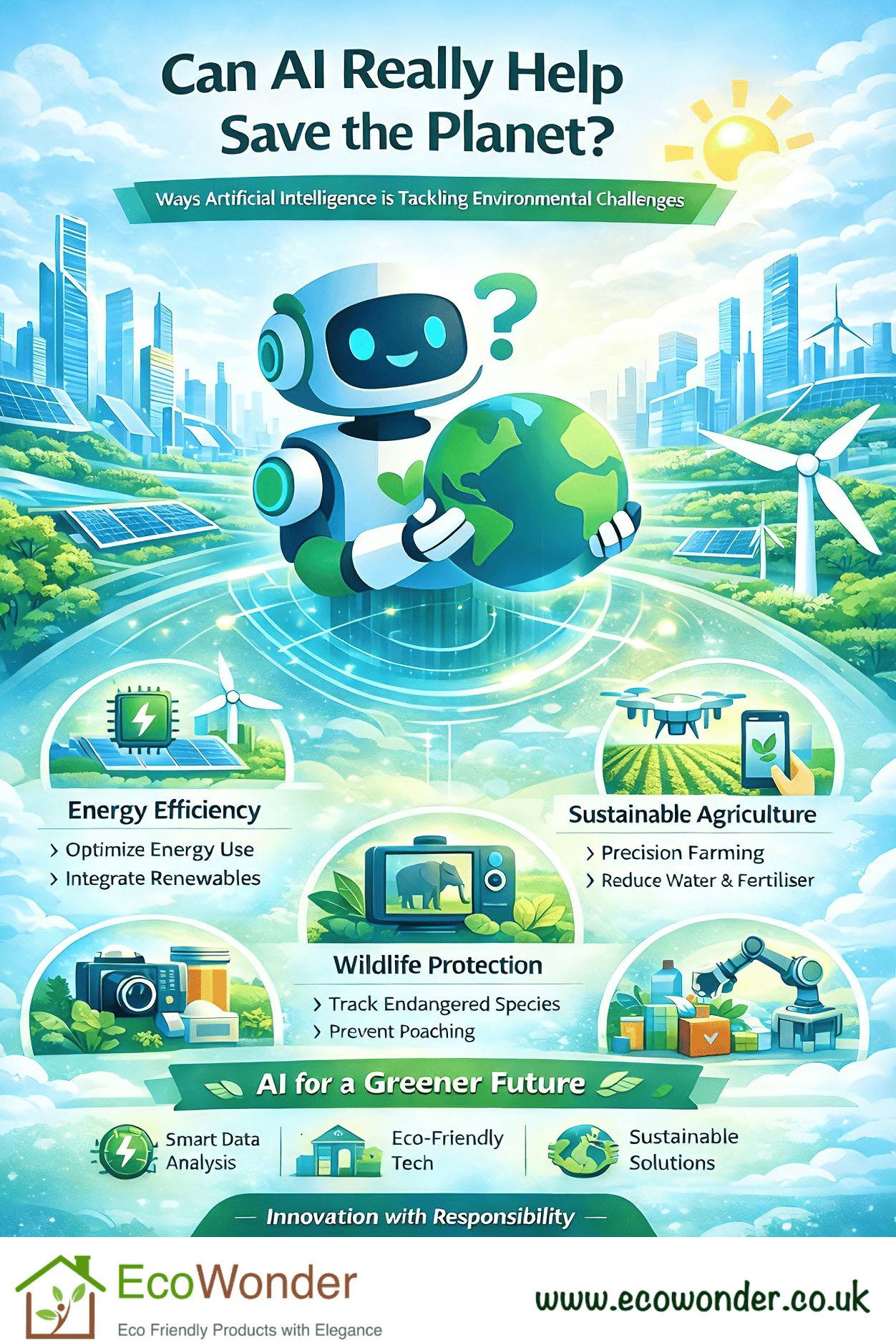
Artificial intelligence is rapidly reshaping how we live and work — but can it genuinely help protect the planet? As climate challenges intensify, businesses, governments and everyday consumers are increasingly looking to smart technologies for practical solutions.
While AI alone won’t solve the climate crisis, real-world applications already show how data-driven tools can reduce emissions, cut waste and make sustainable choices easier for everyone. From smarter energy systems to eco-friendly packaging innovations, AI is becoming a powerful ally in the move towards a greener future.
How AI Supports Climate Action
AI’s biggest environmental strength lies in its ability to analyse massive amounts of data quickly. This allows organisations to:
- Predict environmental risks and climate trends
- Optimise resource use and reduce waste
- Improve supply chain efficiency
- Support sustainable consumer choices
By making complex systems more efficient, AI helps lower carbon footprints across industries.
Real-World Use Cases of AI for Sustainability
⚡ Smarter Energy Management
AI-powered systems can monitor energy usage in real time and adjust consumption automatically. Smart grids balance electricity demand, integrate renewable energy sources and reduce reliance on fossil fuels.
For households and businesses alike, AI tools help identify energy waste — lowering both emissions and bills.
🌾 Sustainable Agriculture & Food Production
Agriculture is one of the largest contributors to greenhouse gas emissions. AI-driven precision farming tools help farmers:
- Reduce water usage
- Apply fertiliser more efficiently
- Monitor soil health and crop growth
- Predict weather patterns
The result? Higher yields with fewer environmental impacts — a win for both producers and consumers.
♻️ Waste Reduction & Recycling
AI is transforming recycling systems by improving waste sorting accuracy. Smart sensors and machine vision can distinguish materials more effectively than manual processes, leading to:
- Higher recycling rates
- Reduced landfill waste
- Lower contamination levels
For consumers, this means easier access to truly sustainable waste solutions.
🚚 Greener Supply Chains
From production to delivery, AI helps companies reduce emissions by optimising transport routes, forecasting demand and minimising overproduction.
Smarter logistics reduce fuel consumption and unnecessary packaging — key areas where everyday shopping habits intersect with environmental impact.
🌍 Environmental Monitoring & Conservation
AI models analyse satellite imagery and environmental data to detect deforestation, monitor wildlife populations and track pollution levels. These tools help policymakers and conservation groups respond faster to environmental threats.
The Challenges: Is AI Always Sustainable?
Despite its benefits, AI has its own environmental footprint. Training large AI systems requires significant computing power and energy. Sustainable AI development focuses on:
- Using renewable-powered data centres
- Designing energy-efficient algorithms
- Minimising unnecessary data processing
Balancing innovation with responsibility is essential if AI is to remain a genuine climate solution.
What This Means for Everyday Consumers
You may not realise it, but AI is already influencing many eco-friendly choices:
- Smart home devices that optimise energy use
- Sustainable shopping recommendations online
- Food apps that help reduce household waste
- Delivery systems that minimise carbon emissions
As AI becomes more integrated into daily life, consumers play an important role by supporting companies that use technology responsibly.
The Future of AI and Sustainability
Looking ahead, AI is likely to accelerate innovation in:
- Climate modelling and disaster prediction
- Circular economy solutions
- Eco-packaging design
- Renewable energy forecasting
When combined with conscious consumer behaviour and sustainable business practices, AI could become a major driver of positive environmental change.
Technology + Human Choices = Real Impact
AI isn’t a silver bullet — but it’s a powerful tool in the fight against climate change. By improving efficiency, reducing waste and supporting smarter decisions, artificial intelligence can help businesses and consumers make more sustainable choices.
Ultimately, saving the planet will require both innovative technology and everyday action. The more we understand how AI works behind the scenes, the better equipped we are to use it responsibly for a greener future.