

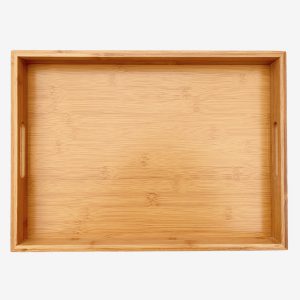
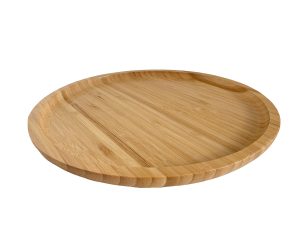

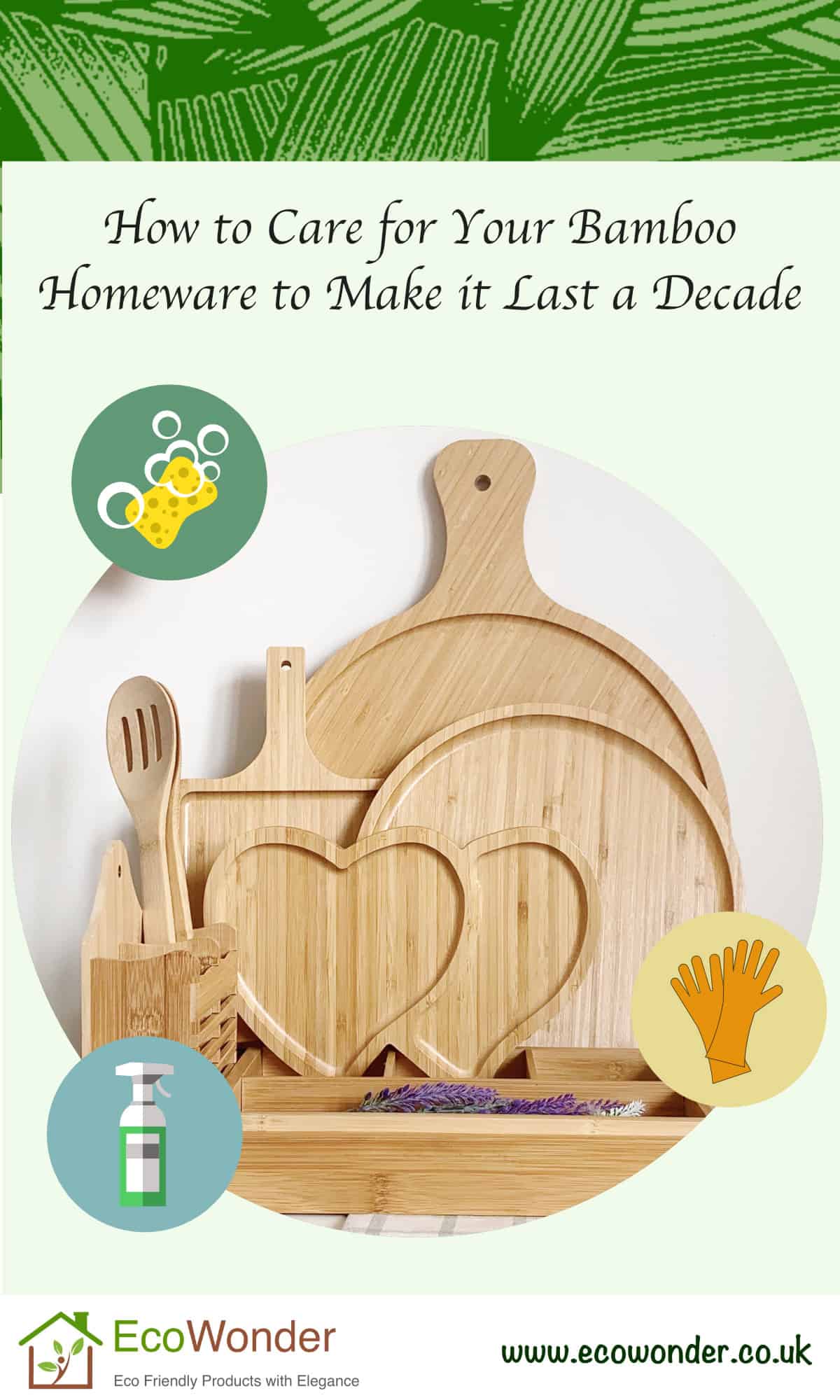
Bamboo is one of nature’s most incredible gifts. It’s durable, naturally antibacterial, and—most importantly—completely sustainable. Whether you’ve just invested in a set of bamboo serving trays, cutting boards, or kitchen utensils, you’ve made a choice that helps reduce plastic waste on the Planet.
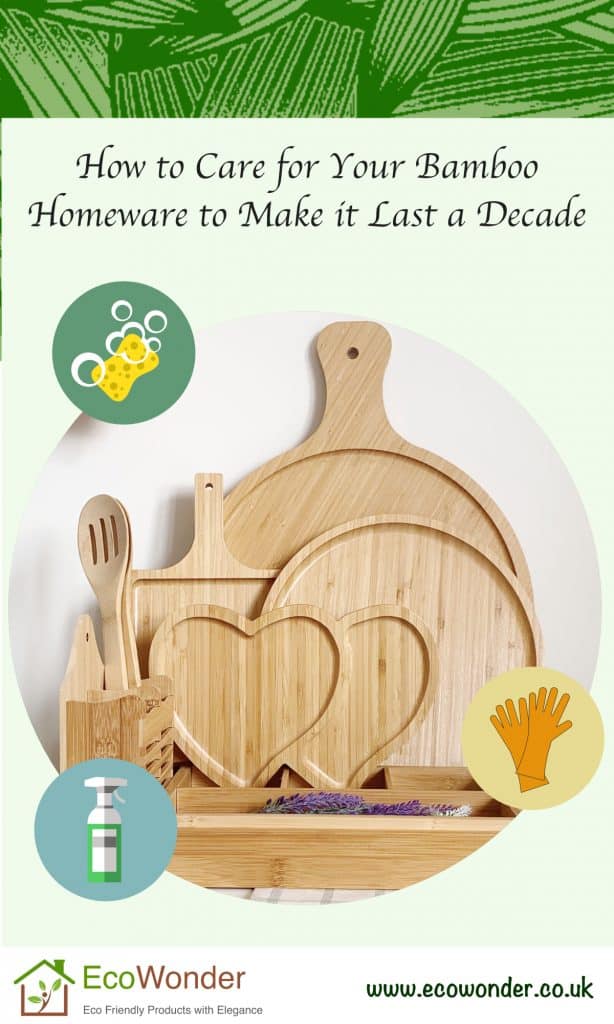
However, while bamboo is tougher than many hardwoods, it is still a natural fiber. If you treat it like plastic, it won’t last. If you treat it with love, it can easily stay in your kitchen for a decade or more.
Here is the ultimate guide to cleaning, maintaining, and reviving your bamboo homeware.
1. The Golden Rule: Hand Wash Only
If there is one thing that shortens the life of bamboo, it’s the dishwasher. The high heat, prolonged exposure to water, and harsh detergents will cause bamboo to swell, warp, and eventually crack.
- The Method: Use warm (not boiling) water and a mild dish soap.
- The Tool: A soft sponge or a natural fiber brush. Avoid steel wool or abrasive scrubbers that can create tiny scratches where bacteria can hide.
2. Dry Immediately (Do Not Soak)
Bamboo is porous. If it sits in a sink full of water, the fibers soak up the liquid and expand. When they dry out, they contract, which leads to structural damage.
After washing, wipe your bamboo items immediately with a clean tea towel. Standing them upright in a drying rack to allow air to circulate around all sides is the best way to ensure no moisture is trapped.
3. Season Your Bamboo with Oil
Just like a cast-iron skillet or a high-end leather jacket, bamboo needs “seasoning” to stay hydrated. Without oil, bamboo becomes brittle and loses its lustrous finish.
- How often? Once a month, or whenever the wood starts to look dull or feel “fuzzy.”
- What to use: Use Food-Grade Mineral Oil (Best oil for bamboo wood) or a specialist bamboo cream.
- What to avoid: Never use vegetable, olive, or canola oil. These are organic fats that will eventually go rancid, leaving your homeware smelling unpleasant and potentially harboring bacteria.
- The Process: Apply a generous amount of oil to a clean, dry cloth. Rub it into the grain, let it sit for 20 minutes, and buff off any excess.
4. Banishing Stains and Odors
Because bamboo is used for food, it occasionally encounters “difficult” ingredients like beetroot, turmeric, or garlic.
- To remove smells: Sprinkle coarse salt over the surface and rub it with half a lemon. The acidity kills bacteria, and the salt acts as a gentle abrasive to lift odors.
- To remove stains: Create a paste of baking soda and water. Rub it into the stain, let it sit for 5 minutes, and rinse.
5. Sanding: The “Reset” Button
One of the best things about bamboo is that it is “renewable” even after years of use. If your cutting board has deep knife marks or feels rough to the touch, don’t throw it away!
Give it a light sand with fine-grit sandpaper (around 220 grit) until the surface is smooth again. Wash away the dust, let it dry, and apply a fresh coat of mineral oil. It will look brand new.
Summary Checklist for a 10-Year Life Span:
- NO Dishwashers.
- NO Microwaves (the heat will cause it to split).
- YES to monthly oiling.
- YES to immediate drying.
By following these simple steps, your EcoWonder bamboo pieces won’t just be a temporary swap for plastic—they will become heirloom pieces in your sustainable home.
Ready to upgrade your kitchen? Browse our latest Bamboo Collection here.