




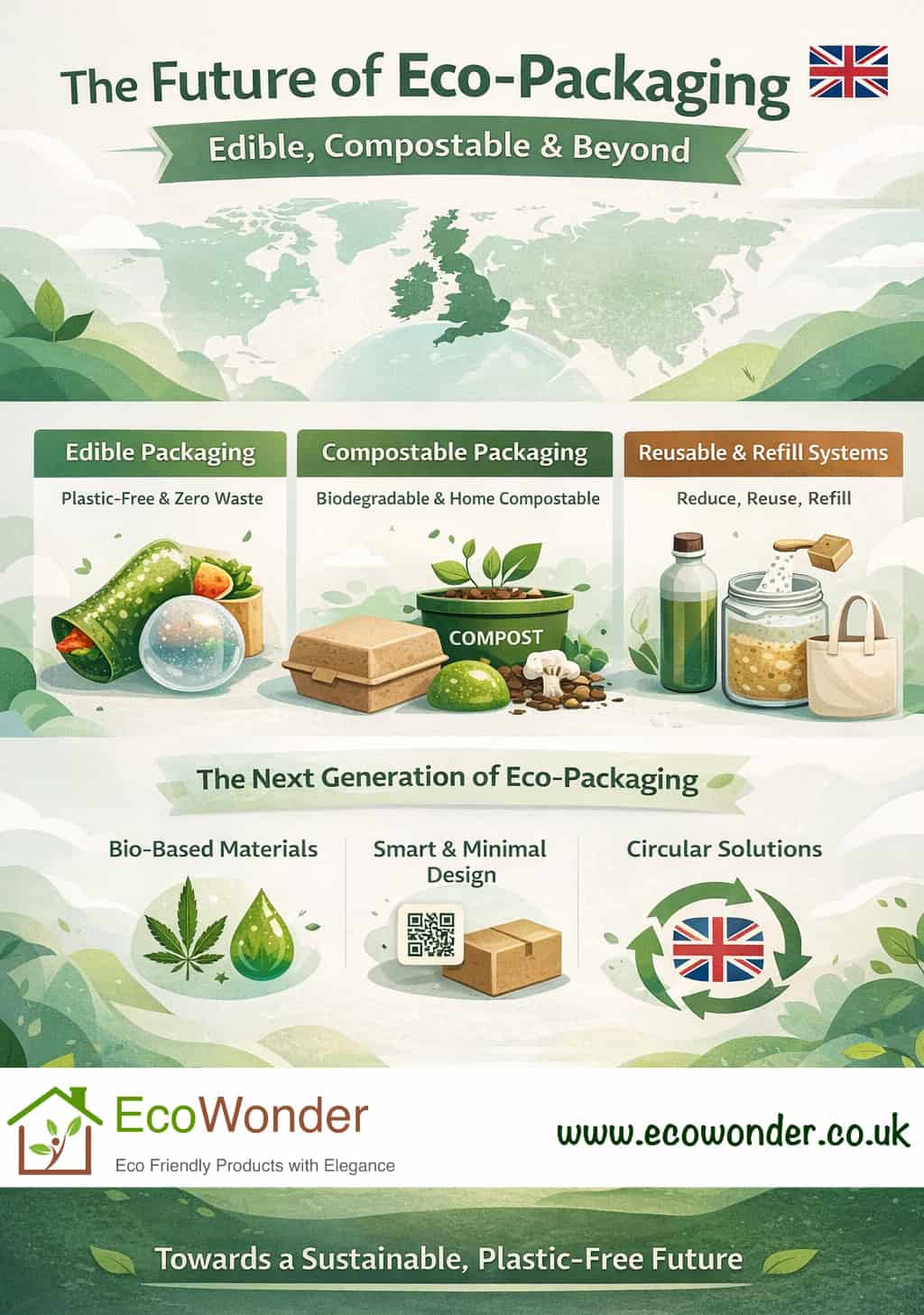
As the UK intensifies its fight against plastic waste, eco-packaging is rapidly becoming a cornerstone of sustainable business and conscious consumerism. With bans on single-use plastics, rising landfill costs and growing public awareness, the future of packaging in the UK is shifting towards edible, compostable and circular solutions that reduce environmental impact without compromising functionality.
Why Sustainable Packaging Matters in the UK
Plastic waste remains a major environmental challenge across the UK, with millions of tonnes of packaging discarded each year. In response, government initiatives such as plastic packaging taxes, extended producer responsibility (EPR), and local council recycling targets are accelerating the transition to sustainable packaging alternatives.
For UK businesses, adopting eco-friendly packaging is no longer just ethical—it’s essential for compliance, reputation and long-term growth.
Edible Packaging: A Zero-Waste Solution for the UK Market
Edible packaging represents one of the most innovative developments in plastic-free packaging. Made from natural materials like seaweed, starches and plant proteins, edible packaging can be consumed or safely composted—creating no waste at all.
In the UK, edible packaging shows strong potential for:
- Festivals and events
- Takeaway food and street food vendors
- Hospitality and catering services
As consumer demand for zero-waste packaging continues to rise, edible solutions are likely to gain traction across urban centres and eco-conscious communities.
Compostable Packaging: Supporting UK Recycling & Waste Systems
Compostable packaging is already a popular eco-packaging choice across the UK. These materials are designed to break down into natural elements without leaving harmful residues, supporting both home composting and industrial composting facilities.
Popular compostable materials in the UK include:
- Sugarcane bagasse packaging
- PLA bioplastics
- Mushroom-based packaging
- FSC-certified paper and cardboard
With many UK councils expanding food-waste collections, home-compostable packaging is becoming especially valuable for households aiming to reduce landfill waste.
Beyond Compostable: The Next Generation of Eco-Packaging
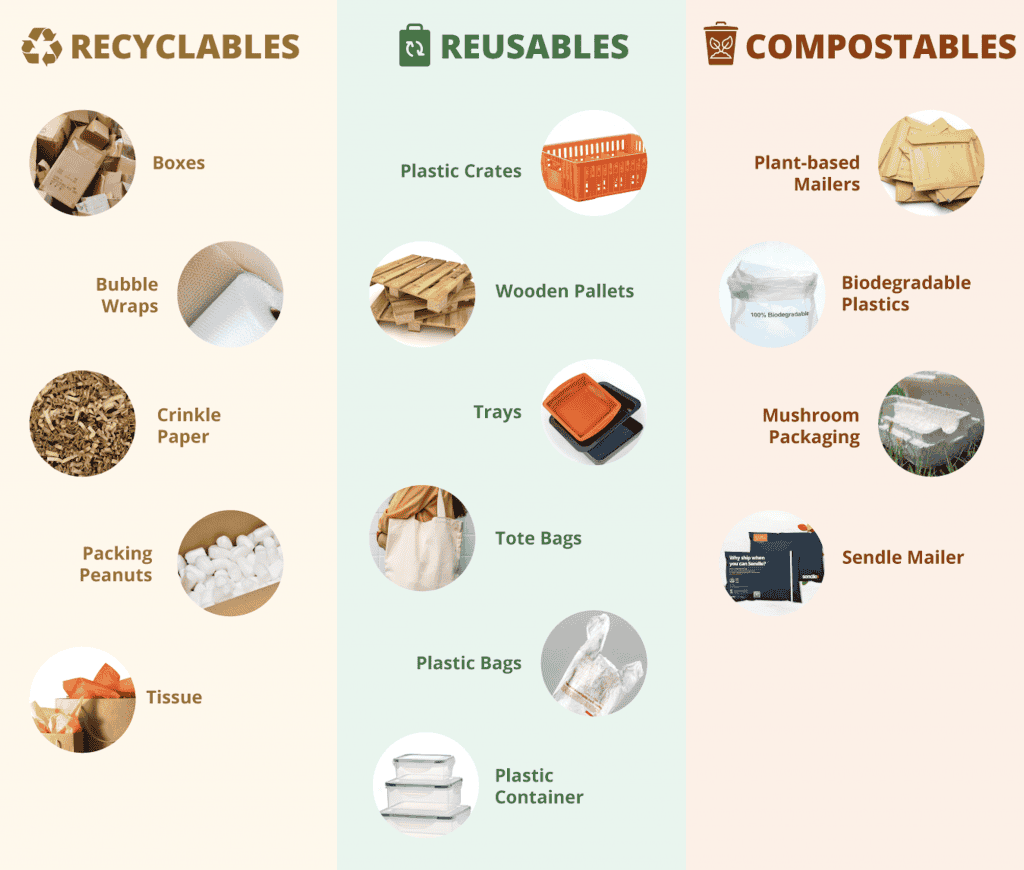
🌱 Bio-Based & Regenerative Materials
UK innovators are increasingly turning to algae, hemp and agricultural by-products to create low-impact packaging that supports regenerative farming and reduces reliance on fossil fuels.
🔁 Reusable & Refill Packaging Systems
Refill models are growing rapidly across the UK, particularly in refill shops, zero-waste stores and sustainable online retailers. Reusable packaging reduces waste at source and aligns strongly with circular economy principles.
🧠 Smart & Minimalist Packaging
From QR codes offering recycling guidance to AI-designed lightweight packaging, smart solutions help UK consumers dispose of packaging correctly while reducing material use overall.
What Eco-Packaging Means for UK Businesses & Consumers
For UK brands, switching to sustainable packaging offers multiple benefits:
- Compliance with current and future UK regulations
- Stronger brand trust among eco-conscious customers
- Reduced environmental footprint
- Alignment with net-zero and ESG goals
For consumers, eco-packaging enables simple, everyday choices that contribute to a cleaner, greener UK.
The Future of Eco-Packaging in the UK Is Circular
The future of eco-packaging in the UK is plastic-free, compostable, reusable and regenerative. As innovation continues, packaging will no longer be waste—it will be part of a circular system that protects the environment and supports sustainable living.
By embracing eco-friendly packaging solutions today, UK businesses and households can play a vital role in building a more sustainable future.